
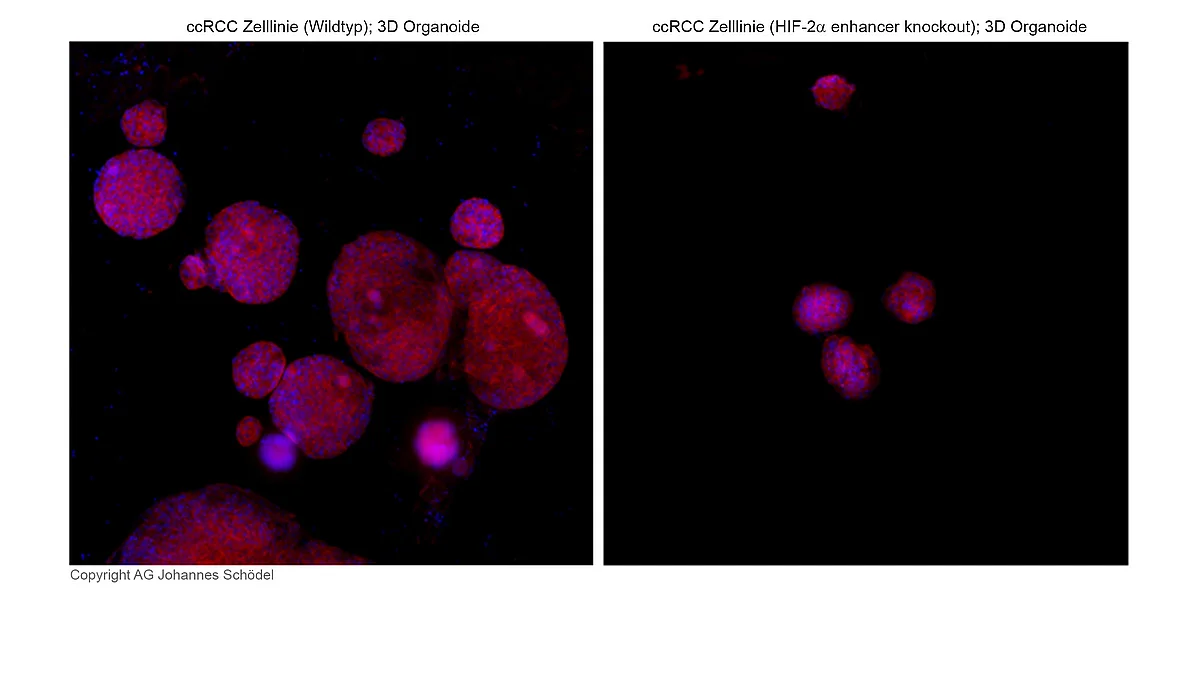
Renal epigenetics and oxygen deprivation (hypoxia) are closely interlinked processes that influence normal kidney function, acute and chronic kidney disease, and the development of kidney tumours. Epigenetic mechanisms such as DNA and histone modifications (methylation/acetylation) regulate gene expression in kidney tissue and are highly sensitive to stress stimuli. Hypoxia is particularly relevant, as the kidney physiologically operates under low oxygen levels. Under oxygen deprivation, e.g., in acute or chronic kidney disease hypoxia-inducible factors (HIFs) are stabilised and activate genes involved in metabolic adaptation, cell survival, and angiogenesis. These epigenetic adaptations can contribute to a short-term cellular protective mechanism. In contrast, in tumour biology – particularly in clear cell renal cell carcinoma – a loss of the von Hippel-Lindau gene (VHL) frequently leads to sustained HIF activation, regardless of prevailing hypoxia. This creates a pseudo-hypoxic, epigenetically altered environment that promotes angiogenesis, metabolic reprogramming and tumour growth.
Our research aims to identify cell-type-specific functions and epigenetic characteristics of the binding of HIF and other transcription factors (TF), whilst defining the mechanisms that influence direct HIF/TF-DNA interactions. To identify relevant binding sites, we utilise modern methods for analysing protein-DNA interactions in combination with next-generation sequencing (CUT&Tag-Seq, CUT&Run-Seq, ATAC-seq, RNA-seq). We functionally characterise the DNA elements in relevant cell lines using ‘genome editing’ technology (CRISPR/Cas). We are also interested in investigating the interaction between HIF binding, epigenetics and disease-associated DNA polymorphisms in more detail (e.g. in renal cell carcinoma or in acute or chronic kidney disease).
Collaborations
- Prof. Dr. rer. med. Arndt Hartmann, Institut für Pathologie, Universitätsklinikum Erlangen
- Prof. Dr. med. Bernd Wullich, Klinik für Urologie, Universitätsklinikum Erlangen
- Prof. David Hoogewijs, Universität Freiburg
- Prof. Dörthe Katschinski, Georg-August-Universität Göttingen
- TRR 374, Universität Regensburg